
How to Prepare Your Garden for a Wet El Niño Winter
By Stace Brewer, Evergreen Nursery Help Desk
Key Takeaways
- A very strong El Niño is likely to bring extra Bay Area rain January through March, though it isn't guaranteed.
- October and November are your prep window. Watch where water flows, pools, and carries soil away during the first rain.
- Send roof water away from your foundation and into planted areas, and help keep your street's storm drain clear.
- Protect the plants you have: turn off irrigation once the rains start, keep mulch off stems and trunks, and steer runoff away from plants that hate wet feet.
- Mulch plus compost protects soil from pounding rain and helps water soak in.
- Even if the rains don't fall as heavily as forecasted, your garden soil will benefit enormously from the extra care.
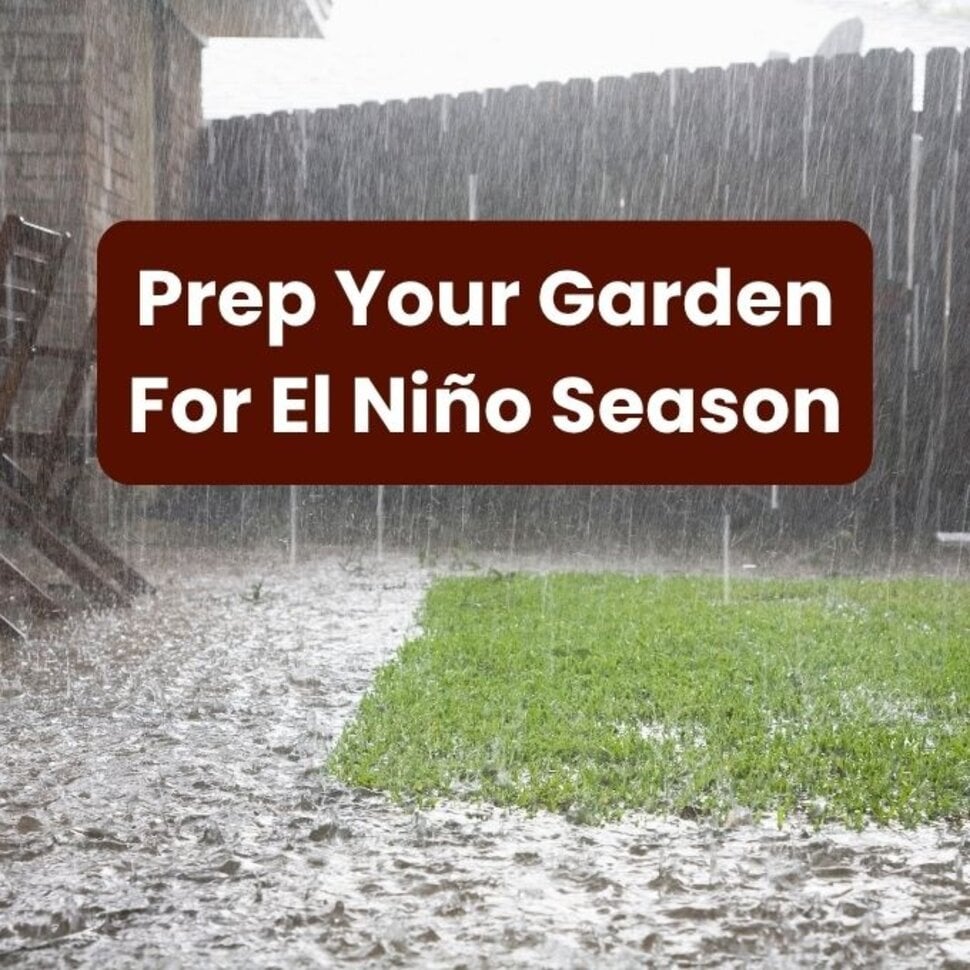
East Bay gardeners know boom-or-bust rain years, and this winter looks like a boom. The NOAA Climate Prediction Center gives the current El Niño a better than 90% chance of becoming a very strong event. For Northern California, forecasters expect most of the extra rain to arrive January through March. Since the Bay Area sits on the northern edge of El Niño's typical wet zone, a drenching is likely but not certain. Either way, every step below helps in any big storm.
Step 1: Watch How Water Moves Through Your Yard
According to this excellent article on managing rainwater from the UC Master Gardeners of Alameda County, about 85% of our yearly rain falls in winter, often in a few intense storms. If you don't already know the path rainwater takes on your property, grab an umbrella during the first good rain and follow the water: where it leaves the roof, where it puddles, and where it washes soil away.
Look closely near your house. The residential building code calls for the ground to drop at least 6 inches within the first 10 feet of a foundation. Pull back beds and mulch that have crept up against walls and flattened that slope.
Find the Storm Drain on Your Block
Follow the water to the curb and you will find a storm drain. When leaves clog it, streets flood and debris washes into our creeks and the Bay. Oakland and San Leandro both run Adopt-a-Drain programs:
- Oakland: Drain adopters can borrow city tools and get rain alert emails before big storms.
- San Leandro: Pick an available drain from the city's roughly 2,200 inlets on the Adopt-a-Drain map, register with its Drain ID, and check it monthly. Public Works lends rakes, brooms, and shovels.
Clear the top of the grate and the gutter beside it, bag leaves for your green bin, and never lift the grate or push debris inside.
Step 2: Fix Drainage Trouble Spots Before the Big Storms
Most yard flooding starts at the roof, so make sure gutters and downspouts flow freely and point away from the house. Then follow the Master Gardeners' motto: slow it, spread it, sink it. Land downspouts on a bed of rocks and guide the water into planted beds, a shallow swale, or a rain garden where it can soak in.
A rain garden is a shallow, planted basin that holds runoff just long enough to soak into the ground. Place it at least 10 feet from your house and plan an overflow route. Read UC's Coastal California Rain Gardens guide (PDF) for the important details, including sizing, depth, and plant lists.
Pro Tip: Not sure how your soil drains? Use the DIY test from our summer fruit tree guide: dig a hole about 12 inches deep, fill it, let it drain, refill it, and time it. Water still sitting after 3 to 4 hours means slow drainage for planting, and the guide shows how to fix it. For a rain garden, UC says a test hole still holding water after 24 hours needs compost worked in, or consider a different spot.
Water pooling against your foundation, seeping into a crawlspace, or a slope starting to slump needs expert help. Renters should tell their landlord or property manager right away. Homeowners can hire a licensed landscape contractor, whose California C-27 license covers grading, and check the license before signing. Foundation cracks or a sliding hillside call for a civil or geotechnical engineer.
Step 3: Protect the Plants You Already Have
You don't need to replant to get ready. The biggest wet-winter threat is root rot, and UC IPM notes it can take hold after as little as 4 to 8 hours of saturated soil. Most of these fixes take an afternoon:
- Turn off the irrigation. Once regular rains begin, switch your sprinkler and drip timers off. The UC Master Gardeners note that most of our rain falls November through March, but plants may still need water during long dry spells, so check the soil before turning timers back on.
- Know your at-risk plants. Plants that need sharp drainage suffer most in soggy soil, including lavender, rosemary, many sages, ceanothus, manzanita, succulents, and citrus. Note which ones sit in low spots or in the path of runoff.
- Steer water around them. A downspout extension, a shallow trench, or a line of rocks can redirect runoff away from a vulnerable plant. Don't pile new soil over existing roots; UC IPM warns never to cover a plant's root crown.
- Pull mulch back from stems and trunks. Keep mulch and soil a few inches away from the base of plants, trees, and graft unions. UC IPM warns that "volcano mulching" invites crown rot.
- Move what's movable. Shift potted citrus, succulents, and tender plants under eaves, raise pots on pot feet, and empty saucers so roots never sit in water.
- Check trees and shrubs after storms. Look for broken or cracked branches. Most gardeners can safely remove branches 1 inch thick or smaller with a good pair of loppers. Call an arborist or tree professional for larger limbs, visible damage, or a neglected tree.
- Watch for warning signs. UC IPM lists wilting, discolored or undersized leaves, early leaf drop, and branch dieback as symptoms of root and crown rot. Wilting in wet soil is a red flag. Bring a photo or a sample to our Help Desk and we'll help you sort out next steps.
Step 4: Protect Your Soil Surface and Build Soil Structure
Bare soil washes away fast. The UC Master Gardeners' fall and winter checklist recommends 3 to 4 inches of mulch over plant root areas. UC's rain garden guide suggests dense mulch that won't float away, like shredded wood or coarse wood chips, including our Shredded Redwood and Almond Wood Chip bulk mulch. In the Oakland hills or other high fire-risk areas, use gravel instead of wood mulch within 5 feet of your house.
Before you mulch, apply a top dressing of Certified Organic Compost. It builds the crumbly soil structure that lets rain soak in and makes underground microbial communities happy. This one step will support your garden's health no matter what the weather does.
After storms, do your best to stay off wet soil, especially around planting areas, because it compacts easily. Also skip fertilizing before storms, since rain washes garden chemicals into creeks and the Bay.
Planting This Fall? Plan for Wet Winters
Fall is still the best time to plant in the East Bay, since winter rain does the watering while roots settle in. Put drought tolerant plants on high ground, and in poorly drained spots, plant on a mound. Dreaming of a California native garden? Most natives want reliable drainage, while sedges and rushes can handle the low spots. Native cultivars and ornamental hybrids with appropriate drainage characteristics will also fit right in. For more ideas, read UC's Coastal California Rain Gardens guide (PDF), then come shop our aisles and see what we're stocking.
El Niño Garden Prep FAQ
When should I start preparing my garden for El Niño?
Now. The heaviest rain is expected January through March, so use the dry fall weekends ahead to clear gutters, mulch, and plant. Even if the rains don't fall as heavily as forecasted, your garden will benefit enormously from the extra attention.
Can I still plant milkweed for Monarchs this fall?
Yes, but it depends on your soil. Native narrowleaf milkweed is adaptable and can grow in clay and seasonally moist soils. Plant it where water drains within a day, not in standing puddles, and mark the spot, since stems die back in winter and regrow in spring.
How do I adopt a storm drain in Oakland or San Leandro?
Visit the Oakland or San Leandro Adopt-a-Drain page, pick a drain near home, and register. Both cities lend tools to volunteers.
Get Your Garden Storm-Ready at Evergreen Nursery
Visit our San Leandro nursery for compost, mulch, and plants for every corner, soggy or dry. Our staff will help you match the right plant to the right spot, and we can talk drainage all day.
Happy Growing!
Stace Brewer, Evergreen Nursery Help Desk | Organic Grower | Soil Nerd
Open daily 9:30–5:30 | 350 San Leandro Blvd, San Leandro.
Recent articles
View all
Harvest Fest: A Sunset Cocktail Fundraiser at Evergreen Nursery

Native Plant Extravaganza at Evergreen Nursery in San Leandro