Cart
Items
How to Water and Care for Houseplants in Warm Weather

Key Takeaways
- Skip the fixed watering schedule — check the top inch of soil (or lift the pot) before watering, since warm weather speeds up how fast plants use water.
- Water deeply until it drains from the bottom, then let the soil dry out somewhat before watering again.
- Warm weather also means lower humidity, stronger sun through windows, and faster-spreading pests — watch leaves and soil for signs of stress.
- Refresh potting soil every year or two, or sooner if water runs straight through the pot or roots are circling at the surface.
- Use a well-draining, indoor-specific potting mix, like E.B. Stone or FoxFarm, rather than garden soil when repotting houseplants.
- Hold off on fertilizing or repotting during an active heat wave — let plants put their energy toward staying hydrated.
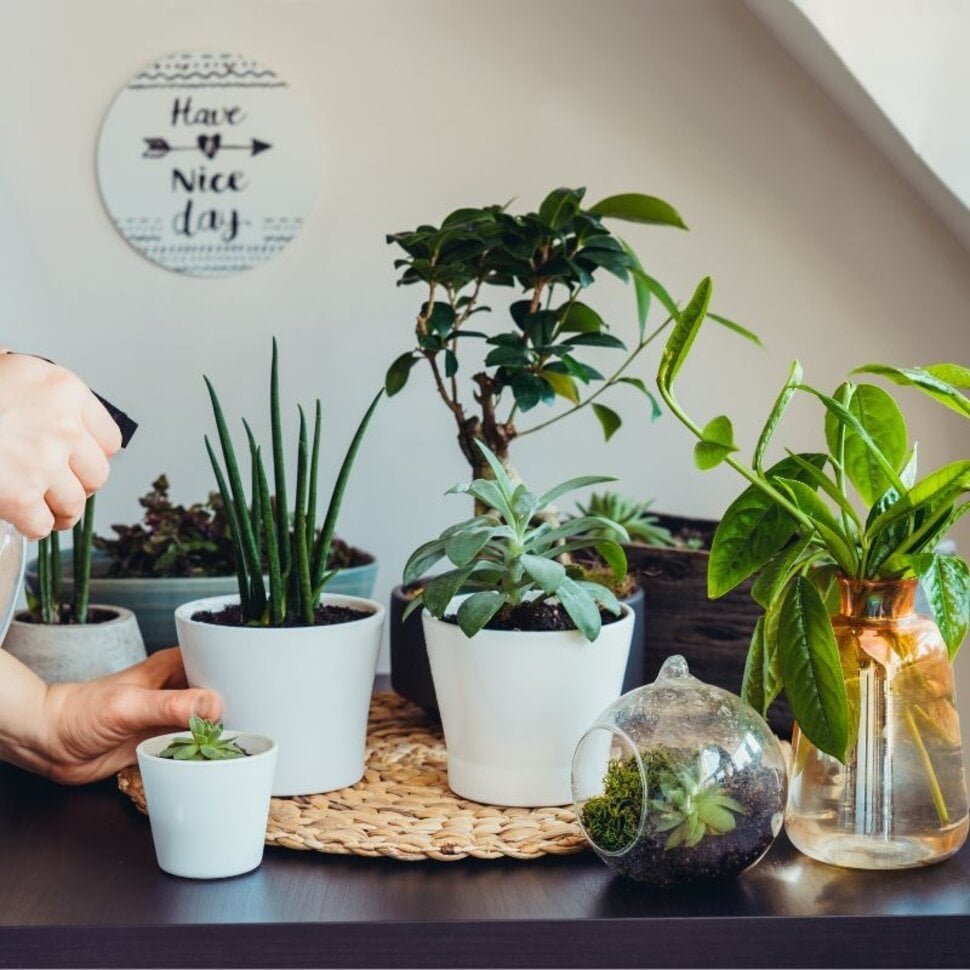
Warm weather in the East Bay — whether it's a stretch of summer sun, an early fall heat wave, or just a run of unseasonably warm days — changes what your houseplants need. Bright light, drier indoor air, and higher temperatures all speed up how quickly your plants use water and energy. The good news: keeping your indoor jungle happy through the warm stretches doesn't take a rigid routine. It takes learning to read what your plants are telling you. Here's how to water smart, keep your plants comfortable, and know when it's time to refresh their soil.
Watering: Read the Plant, Not the Calendar
Watering trips up more houseplant owners than pests or bad light ever will, mostly because the instinct in warm weather is to water more often, on a fixed schedule. But a schedule almost always means watering some plants too early and others too late. The better approach, whether it's 85°F outside or a plain warm week, is to check the plant and the soil before you reach for the watering can.
Check Before You Pour
Stick a finger about an inch into the soil. If it's still moist, wait. If it's dry, it's time to water. For a faster read, lift the pot: a plant that needs water feels noticeably lighter than a freshly watered one. Warmer temperatures, lower humidity, and bright light all mean your plant is using water faster, so check more often during warm stretches rather than assuming last week's schedule still applies.
Water Deeply, Then Let It Dry
When you do water, water thoroughly until it runs from the drainage holes at the bottom of the pot. This flushes out built-up fertilizer salts and makes sure the whole root ball gets a drink, not just the top layer of soil. A light daily sprinkle only wets the surface and encourages shallow, weak roots. Then let the soil dry out somewhat before watering again — that drying period pulls fresh oxygen back into the soil, which roots need just as much as water.
Container Cues That Change Watering Needs
Pots are a much smaller reservoir of soil than garden beds, so they swing between wet and dry far faster, especially in warm weather. A few things make container plants thirstier still:
- Pot size — smaller pots dry out faster than large ones.
- Pot material — unglazed terracotta and clay dry out faster than plastic or glazed ceramic.
- Root maturity — root-bound plants drink faster than those with room left to grow.
When Soil Won't Absorb Water
If the soil has gone bone-dry and started pulling away from the sides of the pot, it's likely become “hydrophobic,” meaning water runs straight through without soaking in. Water slowly in small amounts, pause, and repeat until the soil feels spongy again. Skip bottom-watering (setting the pot in a tray of water) as a fix — it's a riskier habit that can invite root rot.
Always use room-temperature water so you don't shock the roots, and avoid watering during the hottest part of the day when possible.
Raise the Humidity
Warm weather often means drier indoor air, especially with fans or AC running. Most houseplants, particularly tropical varieties, prefer humidity in the 40–60% range. A few easy ways to boost it:
- Group plants together to create a shared humid microclimate.
- Set pots on a pebble tray with water underneath for gentle evaporation.
- Lightly mist leaves in the morning — skip this for fuzzy-leaved plants.
A small humidifier is worth considering if you have a larger indoor plant collection.
Keep Plants Out of Hot Spots
Houseplants love light, but intense sun through west- or south-facing windows can scorch leaves during warm spells. If foliage looks faded or crispy at the edges, move the plant back a few feet or filter the light with a sheer curtain. Just as important: keep plants away from direct AC vents or constantly running fans, which dry out foliage and soil faster than usual.
Watch for Stress Signals
Let your plants guide you. Drooping, yellowing, or browning leaves can signal overwatering, underwatering, or dry air — and above the soil line, those symptoms can look nearly identical. When in doubt, gently slide the plant from its pot and check the roots: healthy roots are white or tan and firm, overwatered roots are brown or black and mushy, and underwatered roots are dry and brittle. Dusty leaves also reduce photosynthesis, so wipe them with a damp cloth occasionally. Check regularly for pests like spider mites or aphids, which can multiply quickly in warm indoor conditions.
Groom and Rotate for Better Growth
Remove yellowed, dry, or damaged leaves to keep plants looking fresh and to encourage new growth. Rotate pots every couple of weeks so all sides get even light exposure, which helps plants grow more symmetrically instead of leaning toward the window.
Refresh the Soil and Repot When Needed
Potting soil breaks down over time, compacting and losing the nutrients and drainage your plant's roots depend on. Warm weather, when plants are actively growing, is a good time to check whether a refresh is overdue — just avoid repotting during an active heat wave, since it temporarily stresses the roots.
Signs it's time: water runs straight through without being absorbed, roots are circling visibly at the surface or through the drainage holes, growth has stalled, or it's been more than a year or two since the last repot.
How to do it: gently remove the plant from its pot and loosen the old soil from the roots. Trim away any mushy or blackened roots. Choose a new pot only one size up — sizing up too much leaves excess soil that stays wet and invites root rot. Add a layer of fresh potting mix, center the plant, and fill in around the roots, watering thoroughly once it's settled.
Choosing the right mix matters. Regular garden soil is too dense for containers and will suffocate houseplant roots. We carry two indoor potting mixes suited to this job: E.B. Stone Indoor Potting Soil, a straightforward, well-draining base formulated to support vigorous growth in all types of houseplants, and FoxFarm Ocean Forest Potting Soil, a nutrient-rich blend of aged forest products, earthworm castings, and other organic ingredients that gives actively growing plants extra support through the warm season. Stop by our Houseplant Boutique planting mix selection and our staff can help match a mix to your specific plant.
A Few More Warm-Weather Reminders
- Use room-temperature water to avoid shocking the roots.
- Hold off on fertilizing during heat waves — plants need their energy to stay hydrated, not to fuel new growth.
- Avoid repotting during an active heat spell unless the plant absolutely needs it; let it stay settled and comfortable instead.
Frequently Asked Questions
How often should I water my houseplants in warm weather?
There's no fixed number of days that works for every plant. Check the top inch of soil before watering — if it's dry, water thoroughly; if it's still moist, wait. Warmer temperatures and drier air mean you'll likely be checking more often than you would in cooler months, but let the soil (not the calendar) make the call.
What's the difference between an overwatered and an underwatered houseplant?
Above the soil, they can look nearly identical — drooping, yellowing, or dull leaves either way. The reliable way to tell them apart is to check the roots: healthy roots are white or tan and firm, overwatered roots are brown or black and mushy, and underwatered roots are dry and brittle.
Should I mist my houseplants during warm weather?
Light morning misting can help boost humidity for many tropical houseplants, but skip it for fuzzy-leaved varieties like African violets, which are prone to spotting when their leaves stay damp. Grouping plants together or using a pebble tray are gentler, more consistent ways to raise humidity.
Is it safe to repot a houseplant during a heat wave?
It's best to hold off. Repotting is stressful for roots even under ideal conditions, and combining that stress with heat makes recovery harder. Water and care for the plant as usual, and plan the repot for a milder stretch of weather.
What potting soil should I use for houseplants?
Skip garden soil, which is too dense and drains poorly in containers. A lightweight, well-draining indoor potting mix works best — we recommend E.B. Stone Indoor Potting Soil or FoxFarm Ocean Forest Potting Soil, both formulated to support healthy root growth in pots.
How do I know when my houseplant needs fresh soil?
Watch for water running straight through the pot without being absorbed, roots circling at the surface or poking through the drainage holes, or growth that's stalled even with good care. If it's been more than a year or two since the last repot, it's worth checking.
If you're ever unsure what a specific plant needs during warm weather, look for the signs it's giving you — plants are usually telling you something. Pay attention, be patient, and remember it's all part of the process.
If you need help on your houseplant journey, visit our San Leandro nursery and garden center today. We're proud to serve plant lovers throughout San Leandro, Oakland, and the greater East Bay. Our plant-loving team members are happy to answer your questions and help you choose the right plant, pot, or potting mix for your space. Happy Growing!
Evergreen Nursery | 350 San Leandro Blvd, San Leandro, CA
Recent articles
View all
The Art of Watering: Why It's the Top Reason Plants Struggle (and How to Fix It)
Summer Victory Garden Bus Tour: Explore Oakland & San Leandro's Urban Farms