SPECIFICATIONS:
- Projected height and spread: 12–16 ft. on semi-dwarfing rootstock; space 12–16 ft. apart
- Growth habit: Upright to spreading, moderately vigorous deciduous tree
- Light requirements: Full to half-day sun; well-drained soil
- Fertilizer requirements: Balanced fruit tree fertilizer or compost applied in early spring; moderate feeding; excess nitrogen increases fire blight susceptibility
- Water requirements: 1–2 inches per week during growing season; deep, infrequent watering preferred; requires well-draining soil
DESCRIPTION:
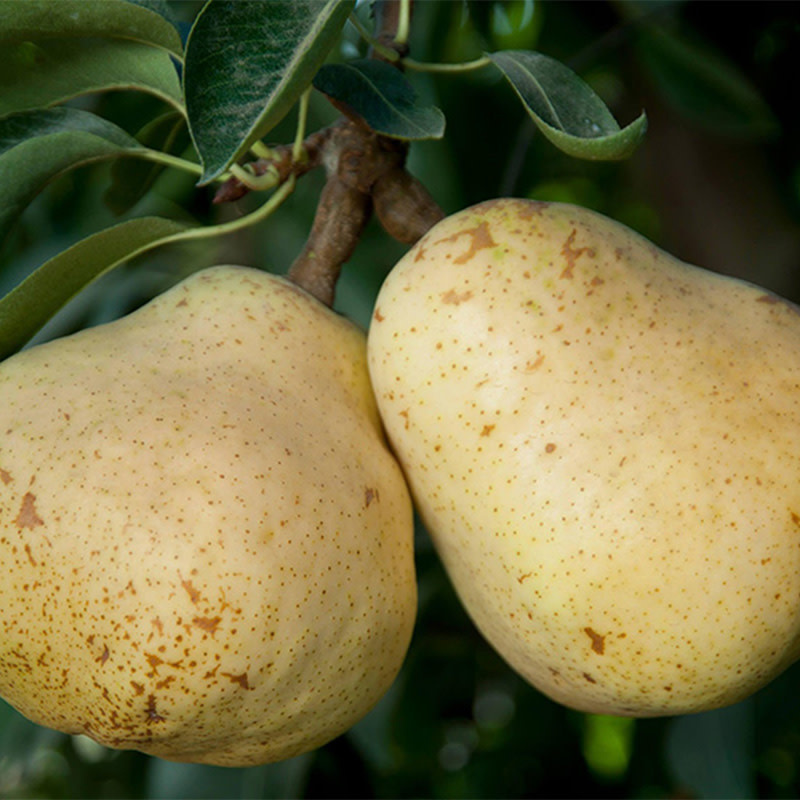
Bartlett — also known as the Williams pear — is the gold standard of European pears and the most widely grown pear in the world. Its large, bell-shaped fruit ripens to a beautiful golden yellow, enclosing cream-colored flesh that's sweet, aromatic, and exceptionally juicy. Bartlett is equally at home eaten fresh, canned, dried, or baked, and ripens in late August in the Bay Area — one of the earlier European pear varieties available.
Bartlett is largely self-fruitful in most West Coast climates, though pairing it with Bosc or D'Anjou will boost yields. Asian pear varieties can also serve as pollinators. Bartlett is a late bloomer, which reduces the risk of frost damage to blossoms in cooler Bay Area microclimates, and it tolerates heavier soils better than many other European pear varieties. Requires approximately 500–600 chill hours, which Alameda County reliably provides. On semi-dwarfing rootstock, Bartlett reaches 12–16 ft. with yields of 50 or more pounds per season. As with all pears, monitor for fire blight and codling moth. Fruit is best harvested while still firm and green, then allowed to ripen at room temperature off the tree.