Items
Log in if you have an account
Dont have an account? Register
Available in store
Specifications
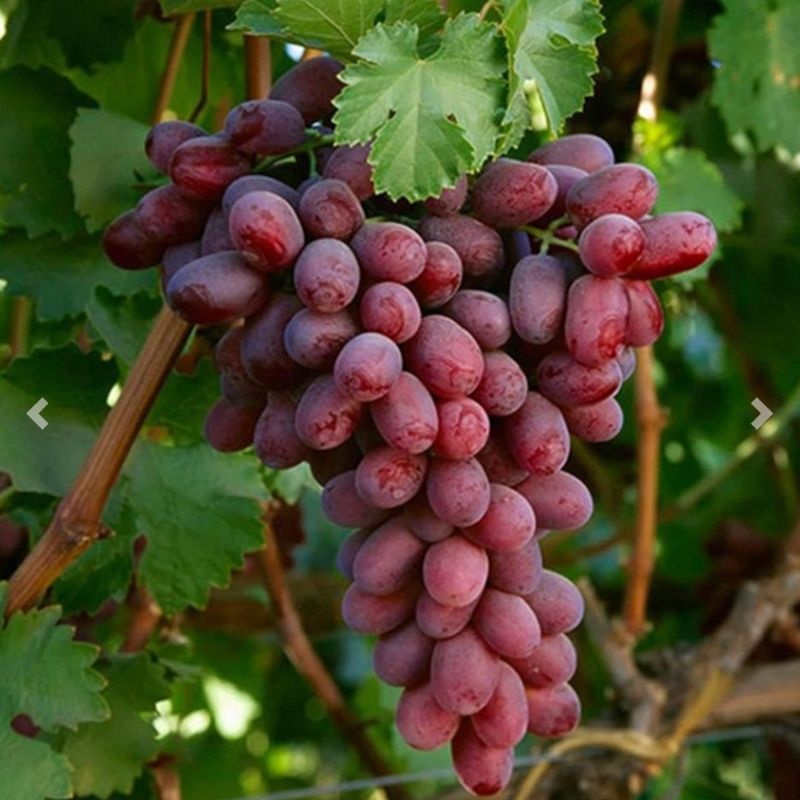
Description ‘Ruby Seedless’ is a vigorous table grape prized for its sweet, richly colored red-to-red-black seedless fruit. Clusters ripen mid-season and offer excellent flavor for fresh eating. The vine’s dense green canopy makes it suitable for screening, shading, or training along sunny fences and arbors.
In East Bay gardens, ‘Ruby Seedless’ thrives in full sun and well-draining soil, with deep watering during its establishment period. Once mature, it becomes more drought-tolerant but benefits from occasional irrigation during hot weather.
Annual dormant-season pruning helps manage its strong growth and maximizes fruit quality. A light organic fertilizer in spring maintains balanced vigor without excessive foliage. The vine also brings ornamental value: its foliage can color attractively in fall, adding interest beyond harvest. With reliable productivity and handsome growth, ‘Ruby Seedless’ is a strong performer for home gardeners who want flavorful, seedless fruit.
Pruning (Winter)
Prune in late December–early February while vines are fully dormant.
Grapes fruit on one-year-old canes.
Choose either cane pruning (1–4 canes, 8–12 buds each) or spur pruning (short 2–3 bud spurs along cordons).
Trellising & Training
Provide a strong trellis, arbor, or fence.
A simple two-wire horizontal trellis supports good fruiting.
Train one strong shoot upward in Year 1; form cordons in Year 2; begin full production pruning in Year 3+.
Watering
First 1–2 years: deep watering every 5–7 days in summer.
Mature vines: less frequent, deep irrigation—more during heat waves.
Avoid excess water late in the season to prevent berry splitting.
Soil & Fertilizing
Plant in well-draining soil; amend clay-heavy areas or use raised beds.
Apply 2–3" of organic mulch to conserve moisture.
Feed lightly with balanced organic fertilizer in early spring; avoid heavy nitrogen.
Pest & Disease Care
Encourage airflow and full sun to reduce mildew.
Use neem or horticultural oil for soft-bodied insects; sulfur or potassium bicarbonate for early mildew pressure (avoid extreme heat).
Net ripening clusters if birds become a problem.
Harvest
Grapes do not sweeten after picking—taste test before harvest.
Use pruners to cut clusters cleanly from the vine.