Specifications
- Projected height & spread: Vines typically reach 15–20+ ft with support
- Growth habit: Vigorous, climbing deciduous vine
- Light requirements: Full sun; tolerates light afternoon shade
- Water requirements: Deep watering during establishment; moderate thereafter
- Fertilizer requirements: Light spring feeding; avoid heavy nitrogen
Description
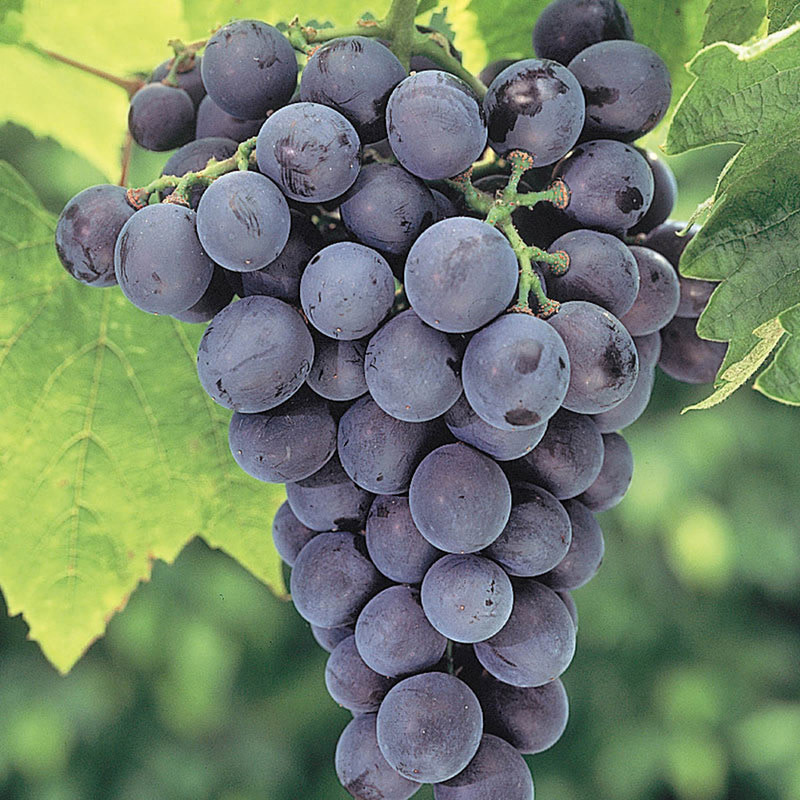
‘Concord Seedless’ offers the familiar, aromatic flavor of traditional Concord grapes—only without the seeds. This vigorous, productive vine produces medium-sized, deep purple clusters with the classic sweet-tart “Concord” character valued for fresh eating, juice, and jelly.
In East Bay gardens, the vine thrives in full sun and well-draining soil, growing well on trellises, arbors, and sturdy fences. It produces best with deep, regular watering during the first year, followed by less frequent irrigation once established.
Annual dormant pruning encourages the development of strong fruiting canes and helps manage its robust growth. In clay-heavy soils common in San Leandro, Oakland, and Castro Valley, amending the soil or planting on a slight mound improves root performance. A light organic fertilizer in early spring supports steady, balanced growth.
With reliable vigor, ornamental foliage, and seedless clusters full of classic Concord flavor, ‘Concord Seedless’ is an excellent choice for home gardeners who want a low-maintenance and flavorful American grape.
Grape Growing & Care in the East Bay
Pruning (Winter)
- Prune in late December–early February while vines are fully dormant.
- Grapes fruit on one-year-old canes.
- Choose either cane pruning (1–4 canes, 8–12 buds each) or spur pruning (short 2–3 bud spurs along cordons).
Trellising & Training
- Provide a strong trellis, arbor, or fence.
- A simple two-wire horizontal trellis supports good fruiting.
- Train one strong shoot upward in Year 1; form cordons in Year 2; begin full production pruning in Year 3+.
Watering
- First 1–2 years: deep watering every 5–7 days in summer.
- Mature vines: less frequent, deep irrigation—more during heat waves.
- Avoid excess water late in the season to prevent berry splitting.
Soil & Fertilizing
- Plant in well-draining soil; amend clay-heavy areas or use raised beds.
- Apply 2–3" of organic mulch to conserve moisture.
- Feed lightly with balanced organic fertilizer in early spring; avoid heavy nitrogen.
Pest & Disease Care
- Encourage airflow and full sun to reduce mildew.
- Use neem or horticultural oil for soft-bodied insects; sulfur or potassium bicarbonate for early mildew pressure (avoid extreme heat).
- Net ripening clusters if birds become a problem.
Harvest
- Grapes do not sweeten after picking—taste test before harvest.
- Use pruners to cut clusters cleanly from the vine.