
Tillandsia Care Made Easy: How to Water & Enjoy Air Plants Year-Round
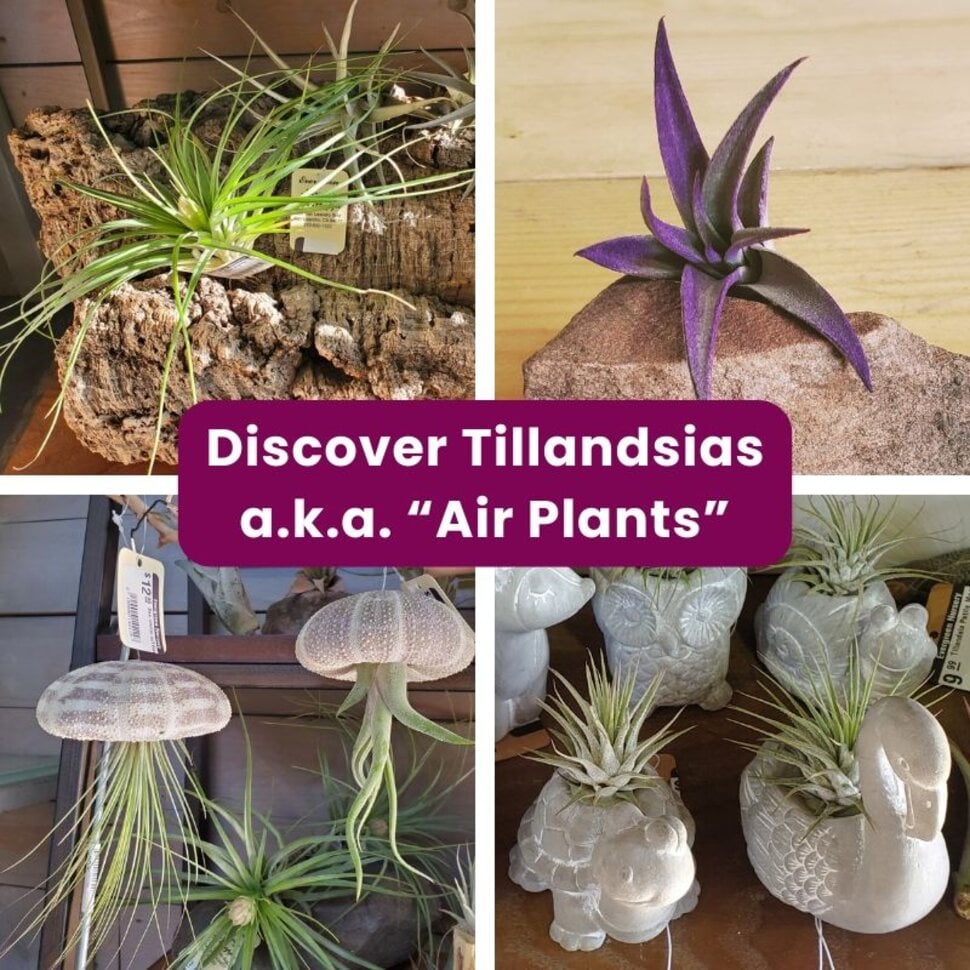
If you’re looking for a unique, space-saving houseplant that doesn’t need soil and still delivers serious style, Tillandsias—better known as Air Plants—fit the bill. These sculptural little plants are perfect for shelves, desks, windowsills, ornaments, and holiday décor. With their attractively low price point and wide range of shapes and colors, air plants also make thoughtful, easy gifts for plant lovers of all ages.
At Evergreen Nursery in San Leandro, we stock a wide variety of smaller sized Tillandsias during the holiday season and throughout the year. Here’s what East Bay gardeners need to know to keep them healthy and thriving, especially when it comes to proper watering.
What Are Tillandsias?
Tillandsias are evergreen perennial plants in the bromeliad family, making them distant relatives of pineapples. In nature, they grow attached to trees, rocks, or cliffs, not in soil. Because they’re epiphytes, they absorb moisture and nutrients through their leaves from air, rain, and humidity.
Most air plants stay between 6 and 12 inches tall, grow slowly, and thrive in bright, indirect light. Many varieties produce colorful blooms in shades of purple, blue, pink, red, yellow, and white. They’re also non-toxic to people and pets and attract beneficial pollinators when grown outdoors in the right conditions.
Light, Temperature, and Placement Indoors
For best results, place your air plants near a bright window where they’ll receive filtered or indirect sunlight. An east- or south-facing window a few feet back works well. Avoid hot, direct afternoon sun, which can scorch the leaves.
Tillandsias prefer indoor temperatures between 64–90°F, which aligns well with most East Bay homes. You can move them outdoors during warm summer months under light shade, but they must come indoors before temperatures drop below 60–65°F.
Bathrooms and kitchens make great locations thanks to extra humidity from daily use.
How to Water Air Plants the Right Way
Watering is the most important—and most misunderstood—part of Tillandsia care. While they don’t need soil, they absolutely need thorough, regular watering to survive and thrive.
The Weekly Soaking Method
-
Once a week, place your air plants in a bowl of room-temperature water
-
Let them soak for 20–40 minutes
-
Gently shake off excess water
-
Set the plant upside down on a towel to dry completely before returning it to display
This drying step is critical. Trapped water inside the plant can lead to crown rot, the most common cause of air plant failure.
Is Misting Enough?
Light misting can help boost humidity, especially in dry indoor air, but misting alone is not enough for most air plants. Think of misting as a supplement—not a replacement—for soaking.
Signs Your Air Plant Needs More Water
-
Leaves curling inward
-
Wrinkled or dull foliage
-
Slowed growth
If you notice these signs, shorten the time between soakings to every 5–6 days.
Fertilizing, Grooming, and New Growth
Air plants only need light feeding. Use a bromeliad or air-plant fertilizer once or twice per month after soaking.
After blooming, the main plant produces offshoots called “pups.” These can stay attached for a fuller look or be gently separated later to grow new plants. Brown leaf tips can be trimmed neatly at an angle to maintain a clean appearance.
Perfect Holiday Gifts and Year-Round Enjoyment
Tillandsias are ideal holiday hostess gifts, stocking stuffers, teacher gifts, desk plants, and apartment-friendly greenery. Because they don’t need pots or soil, they work beautifully in glass globes, driftwood, shells, ornaments, and modern décor displays.
If you’re shopping for unique plant gifts this season—or looking to add something fresh and decorative to your indoor plant collection—stop by Evergreen Nursery in San Leandro to explore our rotating selection of air plants. With the right light, weekly watering, and good air circulation, your Tillandsias can bring beauty and interest to your home all year long.
Recent articles
View all
How To Choose The Best Roses For Your East Bay Garden

Growing Potatoes In East Bay Gardens: 6 Varieties For Spring Planting